实验室手稿:解码“墨三色五光二”的生成现场
Laboratory Notes: Decoding the Generative Site of “Three Inks, Five Colors, Two Lights”
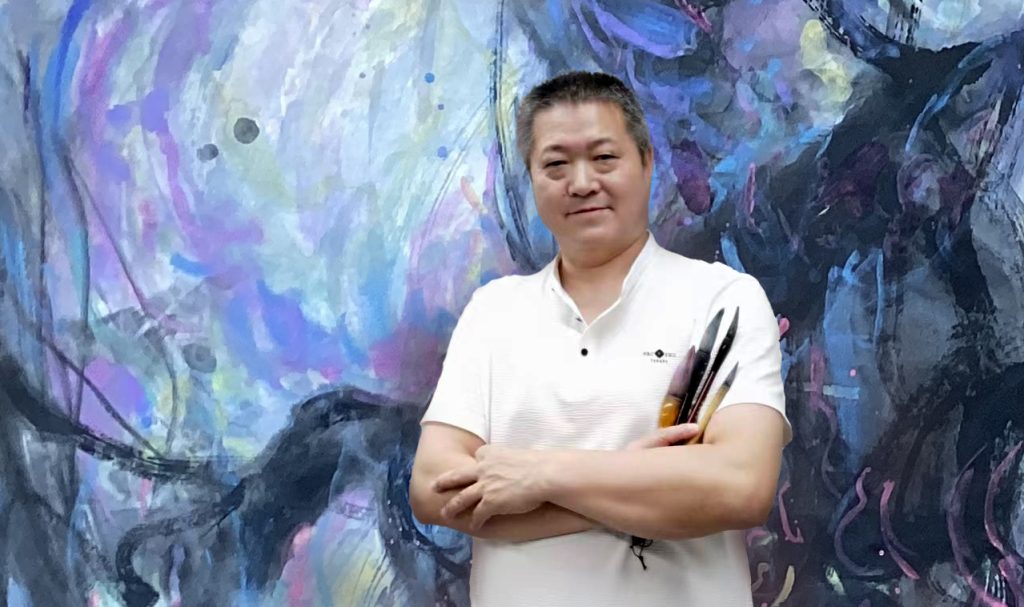
摘要: 本文潜入木然公创作的“后台”,以其“实验手稿”为线索,直观揭示“幻彩写意”体系从理论心法到画面实现的生成过程。通过剖析“墨三、色五、光二”这一核心心法在具体实验中的运用,展现其艺术如何作为一种严谨的“视觉研究”而存在。
Abstract: This essay delves into the “backstage” of Mu Ran Gong’s creative process, using his “Experimental Studies” as a guide to visually unveil the generative process of the “Fantasy-Color Freehand” system, from theoretical concept to pictorial realization. By analyzing the application of the core formula “Three Inks, Five Colors, Two Lights” in specific experiments, it demonstrates how his art exists as a rigorous form of “visual research.”
Laboratory Notes: Decoding the Generative Site of “Three Inks, Five Colors, Two Lights”
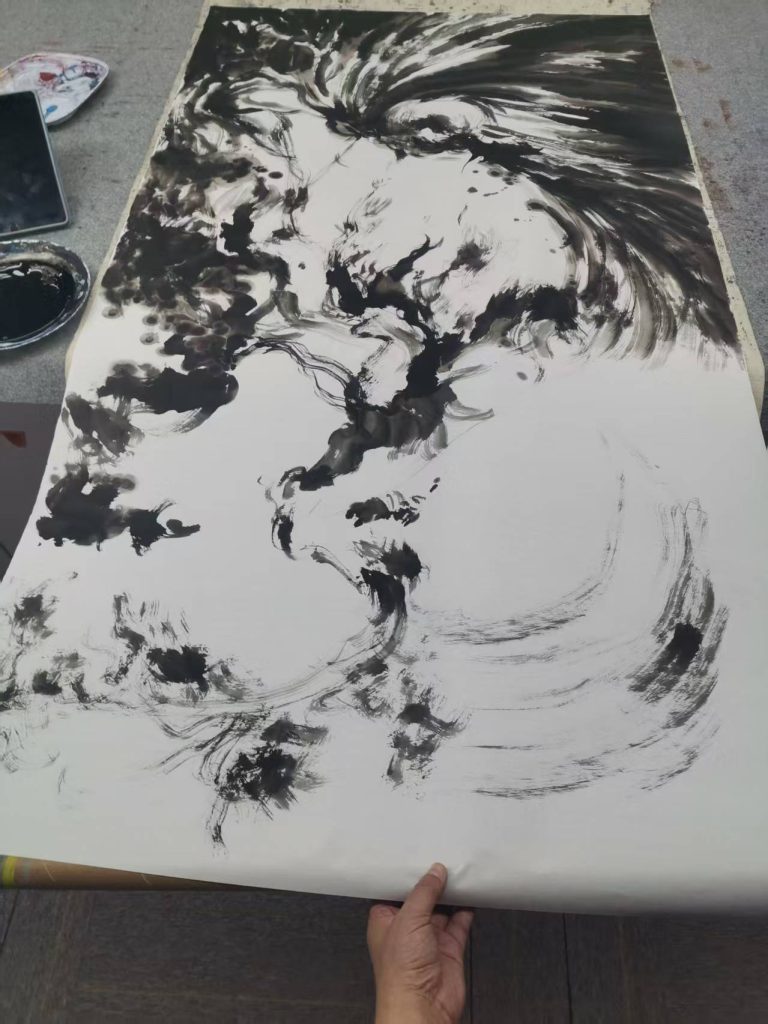
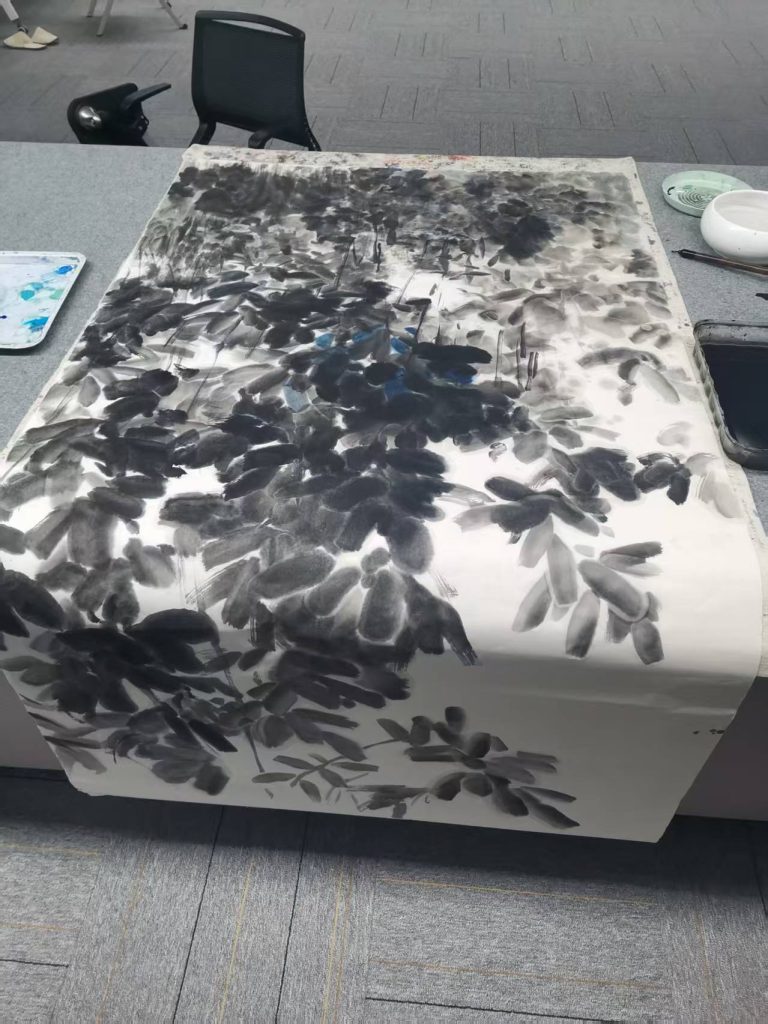
在宏大叙事的背后,“幻彩写意”屹立于大量微观、具体甚至偶然的实验现场。“实验手稿”系列正是通往这个核心现场的钥匙。这些手稿不是草图,而是独立的视觉论文,记录着色彩与水墨在宣纸上碰撞、渗透、对抗与共生的无数种可能性。这里,我们得以窥见 “墨三、色五、光二” 这一核心心法的实操演练。“墨三”,指向墨色在画面结构中的三种角色:作为骨架的焦墨、作为血肉的润墨、作为气息的泼墨。“色五”,并非五种固定颜色,而是指色彩发挥功能的五种状态:破墨之色、塑形之色、氛围之色、点睛之色、和谐之色。“光二”,则指代画面中两种根本的光源逻辑:向内凝聚的“内发光”(源于物体自身的能量)与向外漫射的“环境光”。
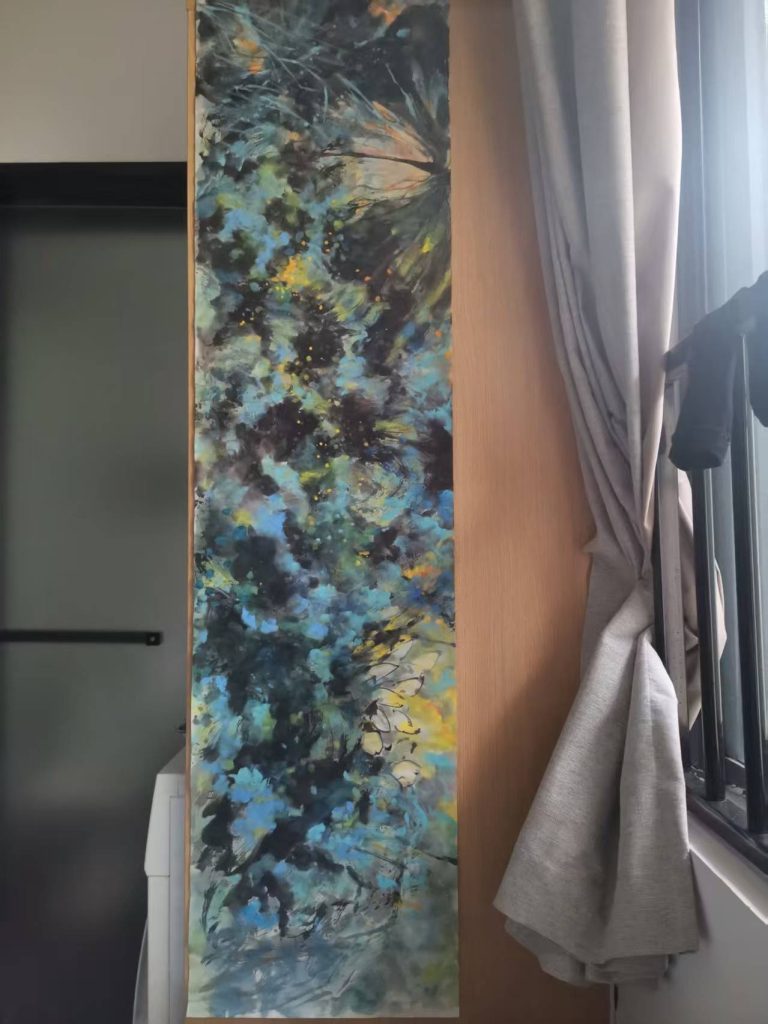
在一份手稿中,我们可能看到艺术家先用宽笔焦墨确立画面的“太极”式运动骨架;随后,以饱和的冷色(如青蓝)破开一部分墨线,形成“色破墨”的激烈交锋;同时,用温暖的赭石在另一区域进行细腻皴
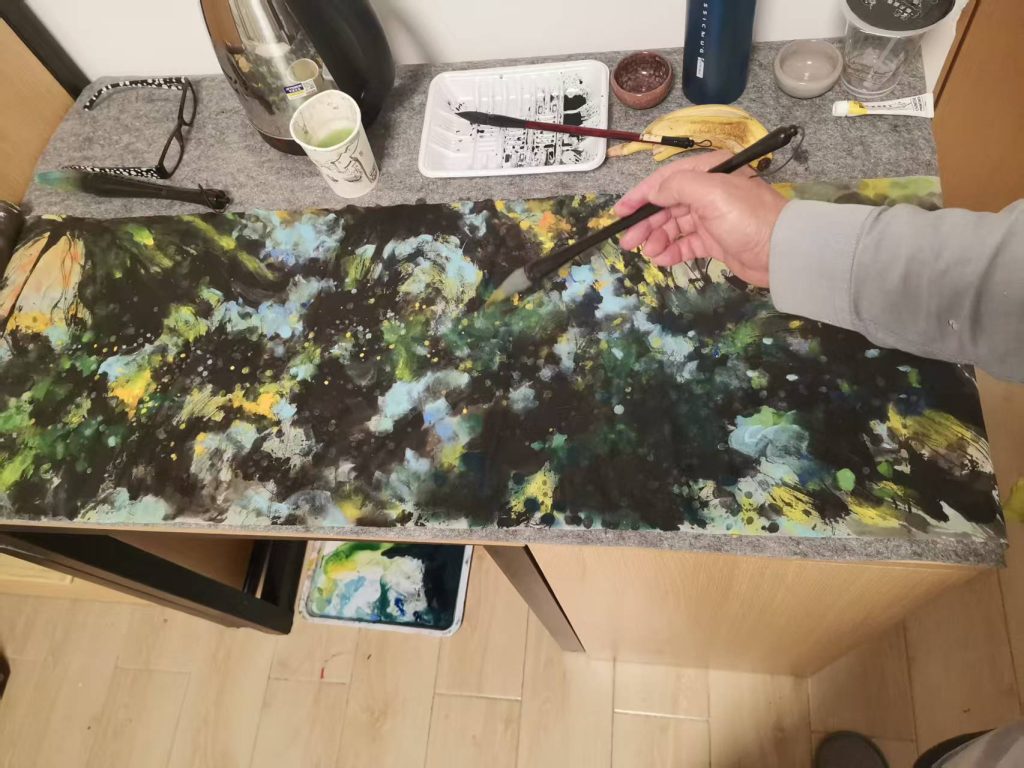
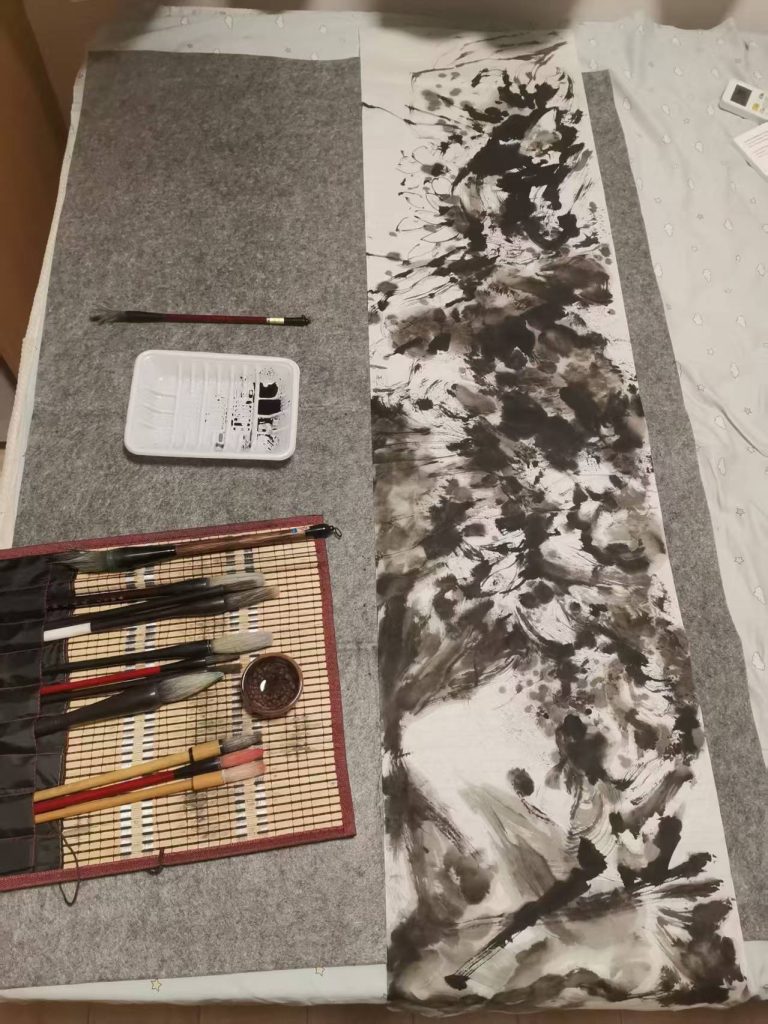
擦,塑造山体的体积与温度(塑形之色);最后,在关键结构点施以极小面积的宝石般亮色(点睛之色),瞬间激活整个能量场,仿佛“内发光”由此迸发。
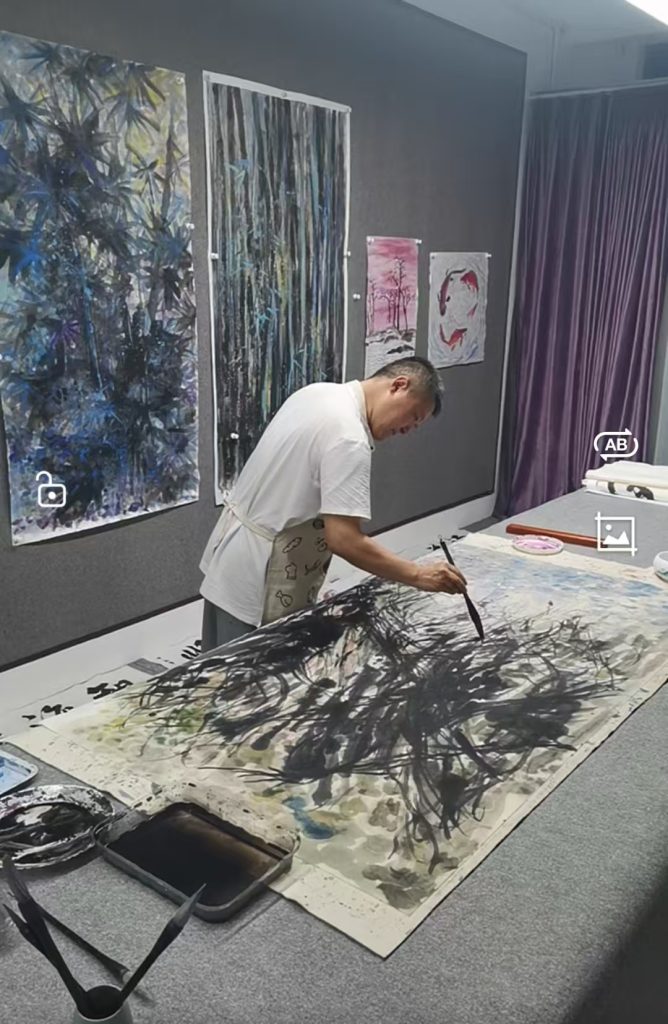
这些手稿证明,“幻彩写意”的磅礴气象,源于极度理性的系统控制与对材料物性的深度玩弄。每一幅完成的作品,都是无数次实验中“最优解”的呈现。这揭示了木然公艺术家的另一重身份:一位在传统宣纸实验室里,不断探寻视觉语言新反应的“科学家”。他的手稿,便是最珍贵的实验记录,邀请观者共同思考:创造的秘密,往往藏在那未完成的、充满可能性的生成过程之中。
Behind the grand narrative, “Fantasy-Color Freehand” stands upon a foundation of numerous microscopic, specific, and even accidental experimental sites. The “Experimental Studies” series is the key to this core site. These studies are not sketches but independent visual dissertations, documenting countless possibilities of collision, permeation, conflict, and symbiosis between color and ink on Xuan paper.
Here, we glimpse the practical application of the core formula: “Three Inks, Five Colors, Two Lights.” “Three Inks” refers to the three roles of ink in the pictorial structure: bone-dry ink as the skeleton, moist ink as flesh and blood, and splashed ink as breath. “Five Colors” does not denote five fixed hues but five functional states of color: color that breaks the ink, color that models form, color that creates atmosphere, color that adds the finishing touch, and color that harmonizes. “Two Lights” refers to two fundamental light-source logics within the painting: inwardly condensing “internal luminescence” (emanating from the object’s own energy) and outwardly diffusing “ambient light.”