
Series
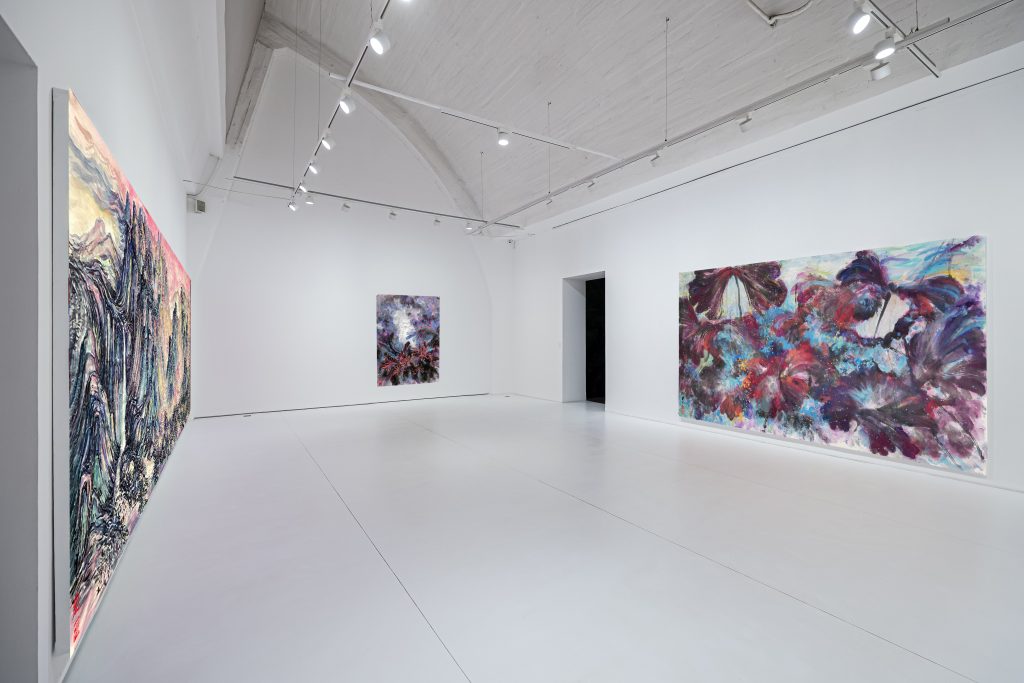
Cosmic Imagery
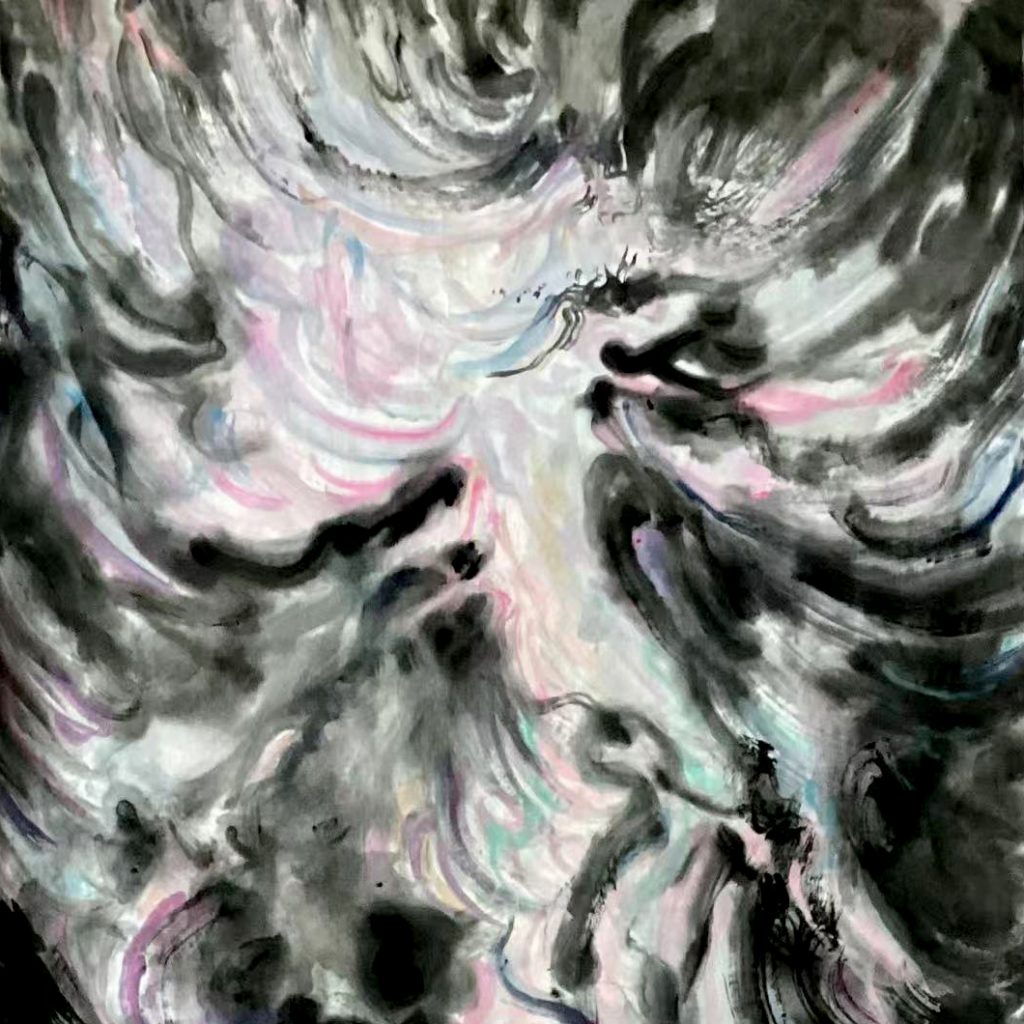
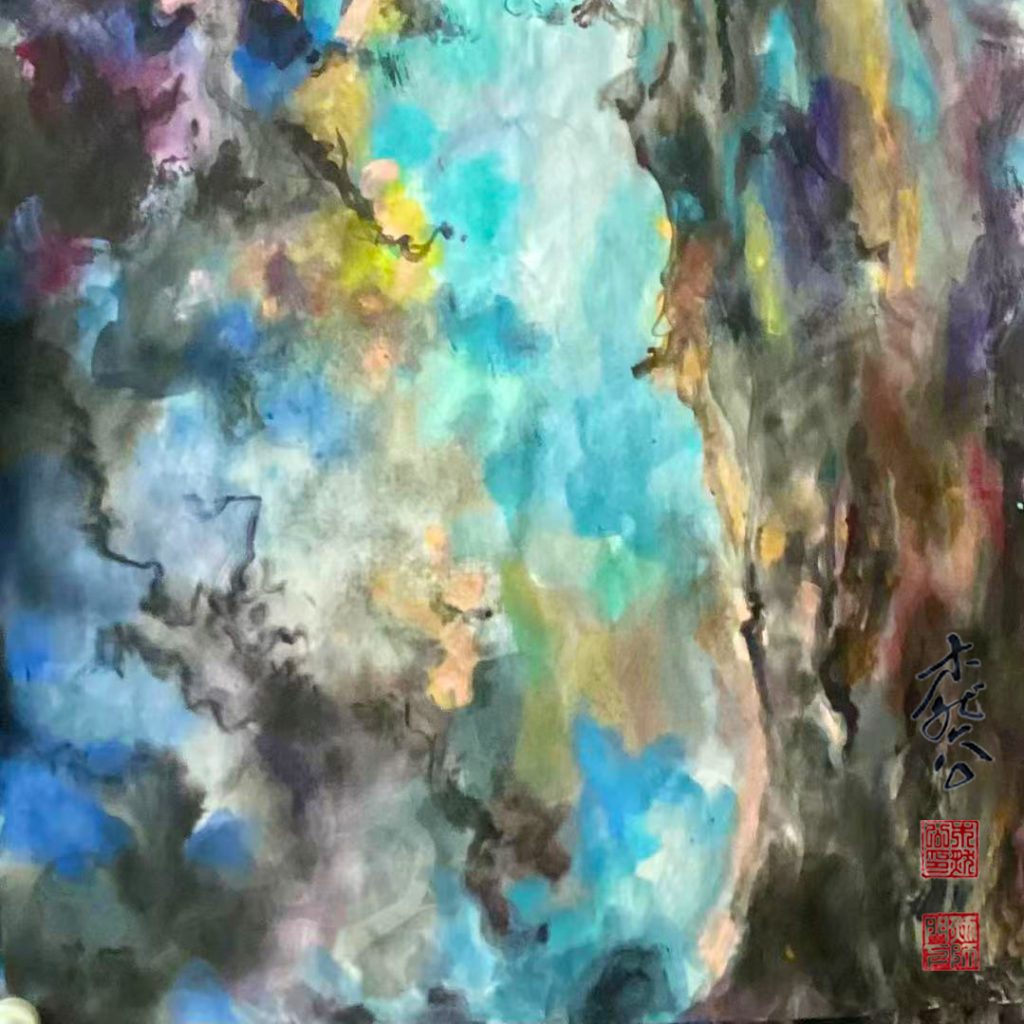
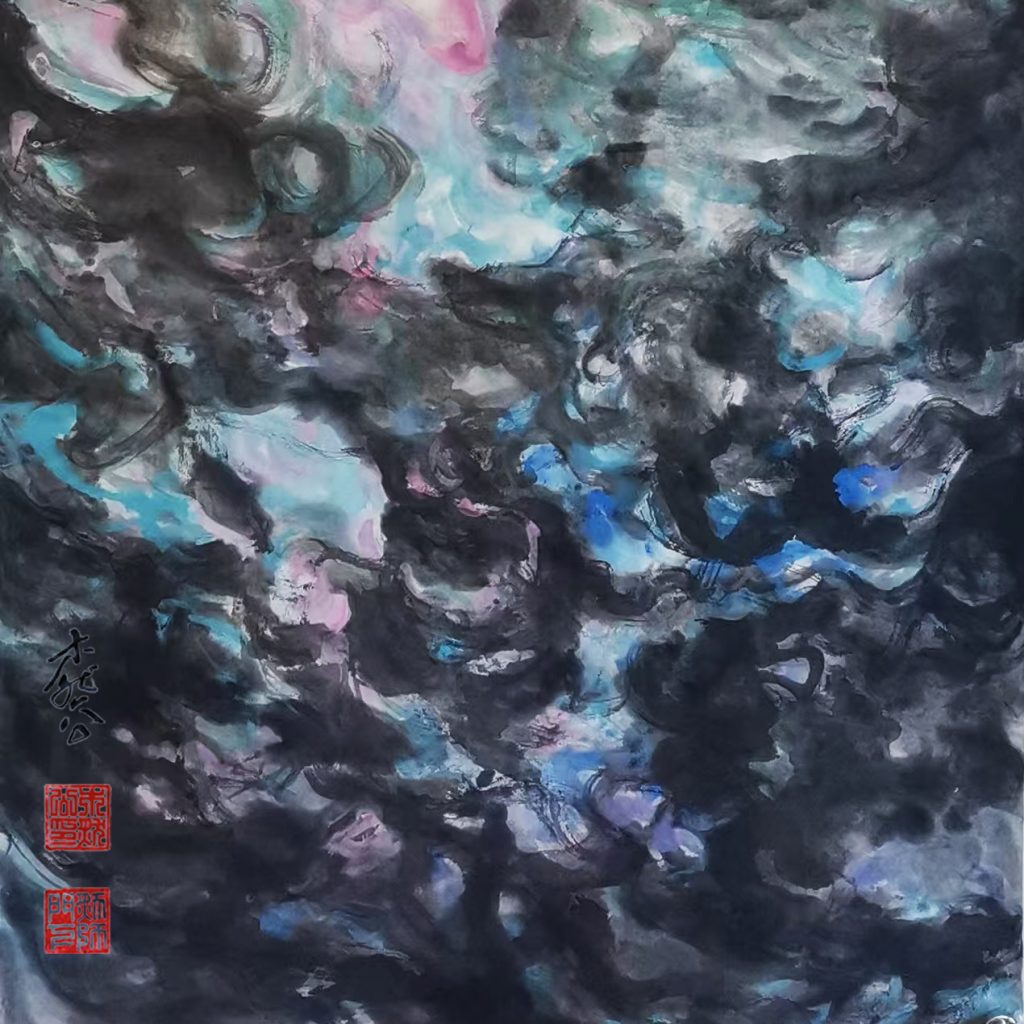
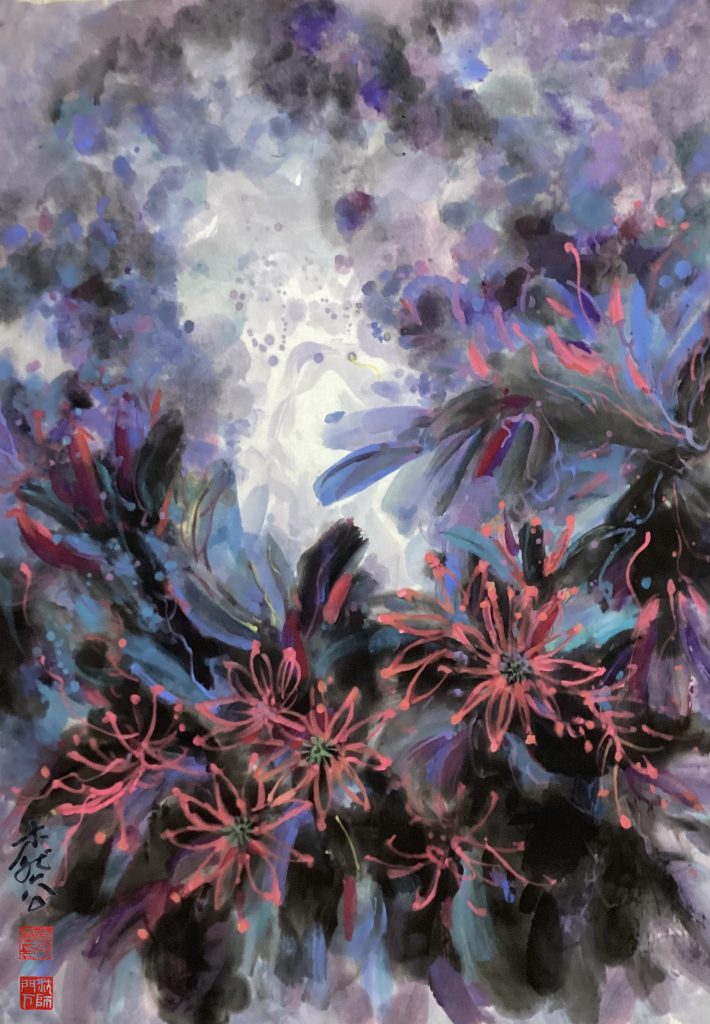
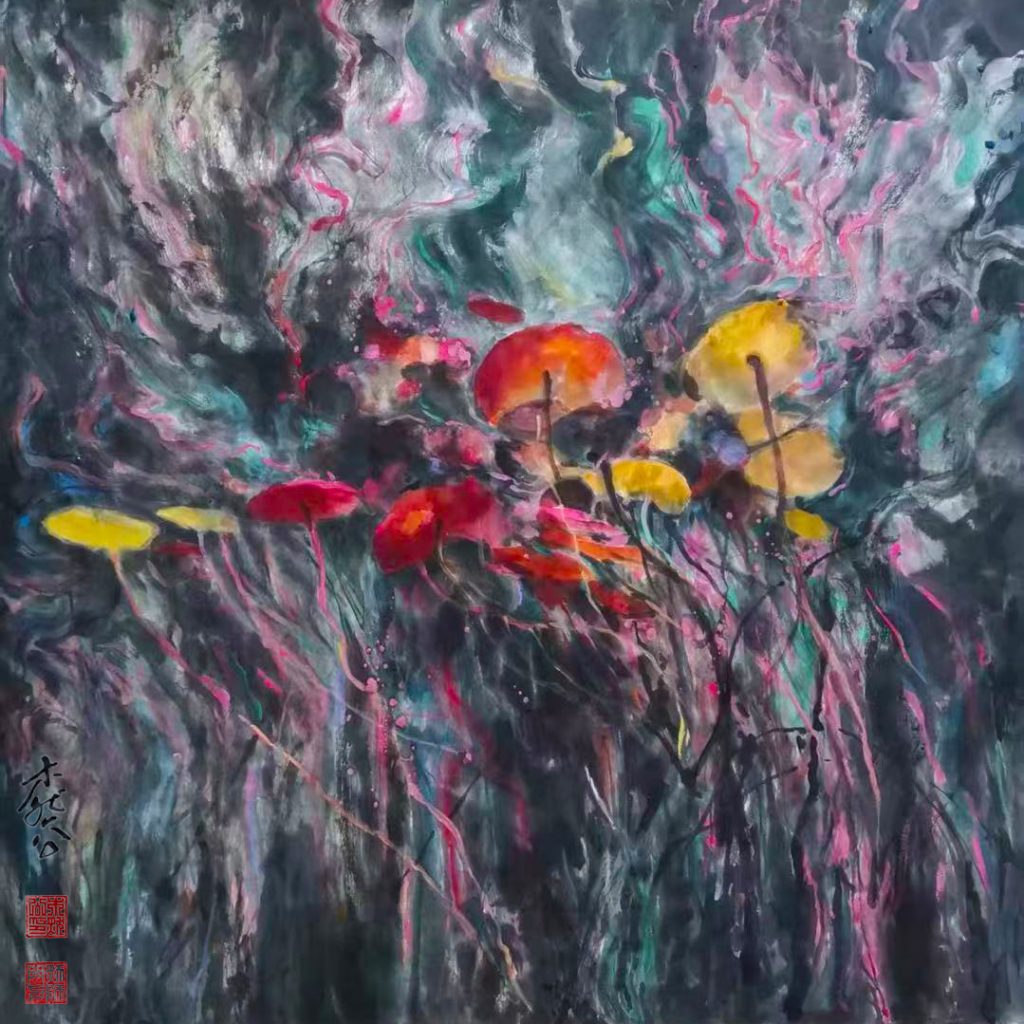
The teaching “Learn from Nature” anchors Chinese landscape painting in the philosophy of representing “Creation.” For Mu Ran Gong, “Creation” in the contemporary context assumes a vaster definition: it is not only the visible clouds over Mount Tai but also the invisible energy fields that cause incense smoke to dance and stars to move. His “Cosmic Imagery” series is the visual manifesto of this cognitive leap.
Here, traditional landscape symbols dissolve entirely. What flows across the canvas are no longer fixed mountain ranges but vortices of color resembling nascent nebulae, eruptions of energy, and phantom topographies. This is not an objective depiction of the cosmos but the externalization of internal vision—a “Heartscape.” Mu Ran Gong once posed a revelatory question: “Why does incense smoke not rise in a straight line? It dances because it rides currents of dark energy and swirling, colorful luminosity.” For him, the traditional “blank space” in ink painting is the greatest illusion and, simultaneously, plenitude—a field shimmering with Dunhuang fresco-like “luminous energy.” The canvas is never empty; it is always a field recording captured forces.
Thus, “Cosmic Imagery” signifies the full maturity and independence of the “Fantasy-Color Freehand” language. The whirling linear structures, colliding color fields, and deep spatial portals in his paintings are rooted in the Eastern aesthetic of “Spirit Resonance” (Qi Yun), yet they speak a universal language about cosmic origins, the flow of time, and elemental energy. He achieves a dual transcendence: formally, transforming ink from a tool for “depicting objects” into an autonomous syntax for “constructing realms”; conceptually, elevating personal meditation into a metaphysical inquiry with shared human resonance.
“然师讲法”曾锚定山水画的哲学根基——再现“造化”。对木然公而言,这“造化”在当代有了更辽阔的定义:它不仅是目之所及的泰山云海,更是驱动香火舞动、星辰运行的无形能量场。他的“宇宙心象”系列,便是这场认知飞跃的视觉宣言。
在这里,传统山水符号彻底溶解。画面中奔涌的不再是固定的山峦脉络,而是如星云初生般的色彩涡旋、能量喷发与幽灵地貌。这并非对宇宙的客观描摹,而是 “内观”所得的心象外化。木然公曾提出一个启发性问题:“香火为何不直上?因其乘暗色能量与彩色光气之流而舞。” 对他而言,传统水墨的“留白”实为最大的幻觉与充盈——那是敦煌壁画般辉煌的、涌动“光气”的场域。画布从未空置,它始终是被捕捉之力的记录场。
因此,“宇宙心象”标志着“幻彩写意”语言的彻底成熟与独立。其画面中旋转的线性结构、碰撞的色域、深邃的空间门户,根系于东方“气韵生动”的美学,却诉说着关于宇宙起源、时间之流与基本能量的普世命题。他完成了双重超越:在形式上,将水墨从“状物”工具转变为“造境”的自主语法;在观念上,将个人冥想提升为具备人类共通感的形而上学追问。
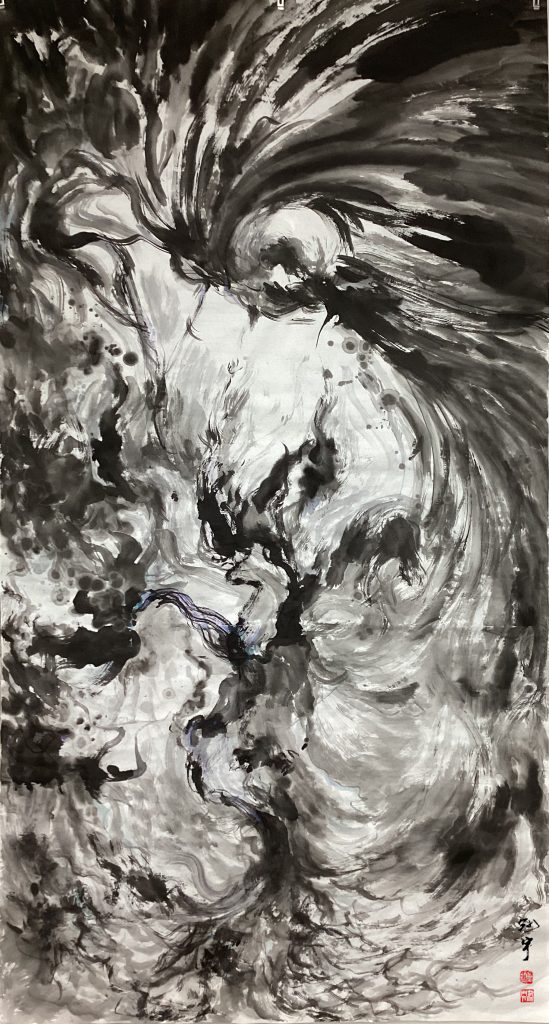
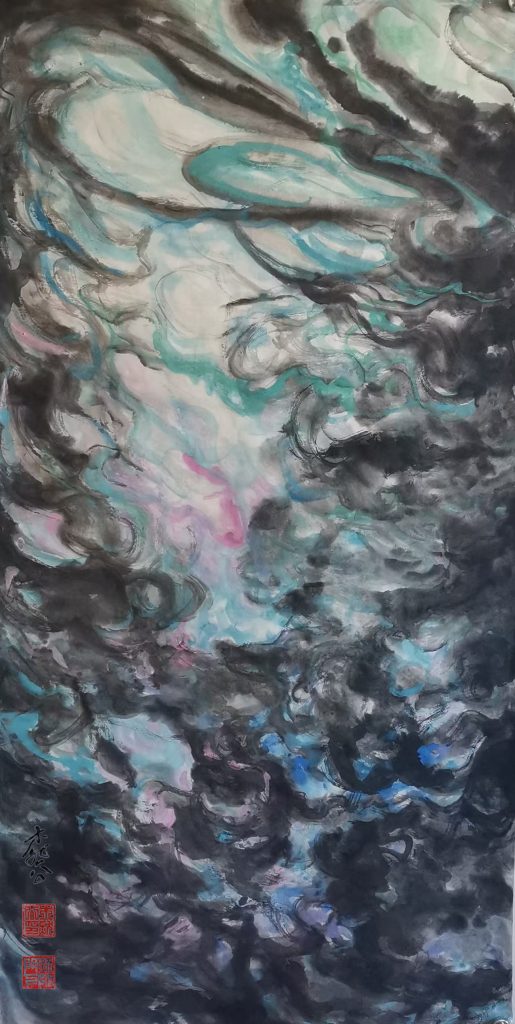
中国画的墨色,远不止一种视觉色彩。它承载着中国文化的特殊精神,融汇了儒、释、道三家的哲学理念。以墨观象,由墨入境,抵达一种儒、释、道共倡的静观境界。
道家倡导“恬淡”的修养,认为“五色令人目盲”。从五彩绚烂归于墨色平淡,并非消退,而是一种精神境界的升华与返璞归真。这条深邃的精神文脉,虽未完全形成理论文字,却始终蕴含于远古艺术、民间艺术等丰饶的传统土壤之中,构成了“幻彩写意”美学得以生发与对话的古老基石。
The ink in Chinese painting is far more than a visual hue. It carries the unique spirit of Chinese culture, embodying the philosophical tenets of Confucianism, Buddhism, and Taoism. Through ink, one contemplates forms and enters a state of serene observation—a realm advocated by all three traditions.
Taoism promotes a cultivation of “simplicity and tranquility,” suggesting that “the five colors can blind the eye.” The return from dazzling polychromy to the subtlety of monochrome ink is not a diminishment, but an elevation—a sublimation of the spirit and a return to essence. This profound spiritual lineage, though not fully systematized in textual theory, has always been embedded within the fertile ground of ancient and folk arts. It forms the ancient foundation from which the “Fantasy-Color Freehand” aesthetics germinates and engages in dialogue.