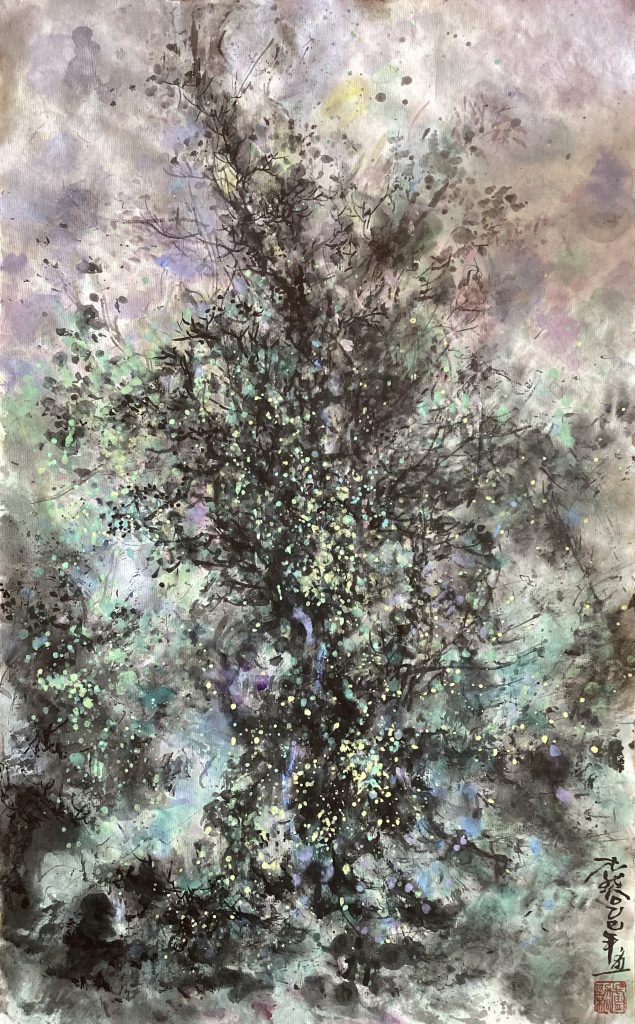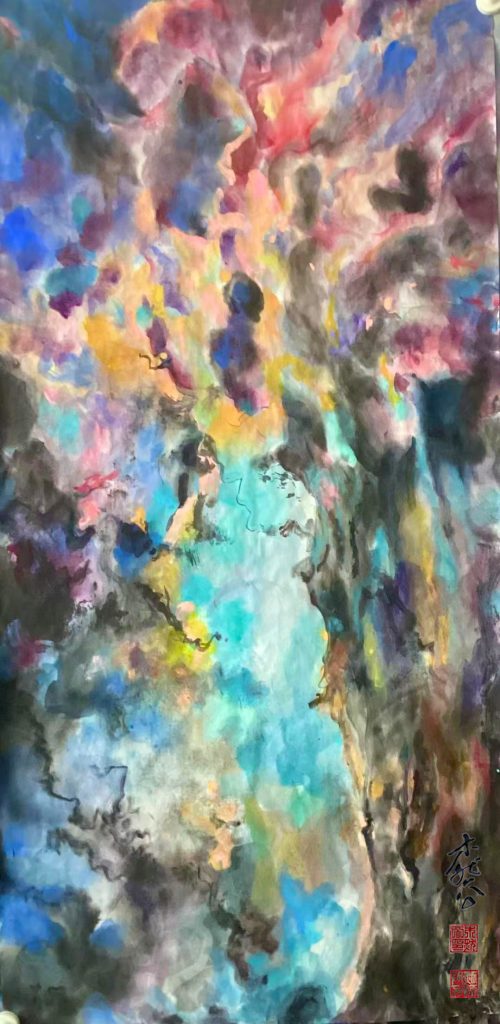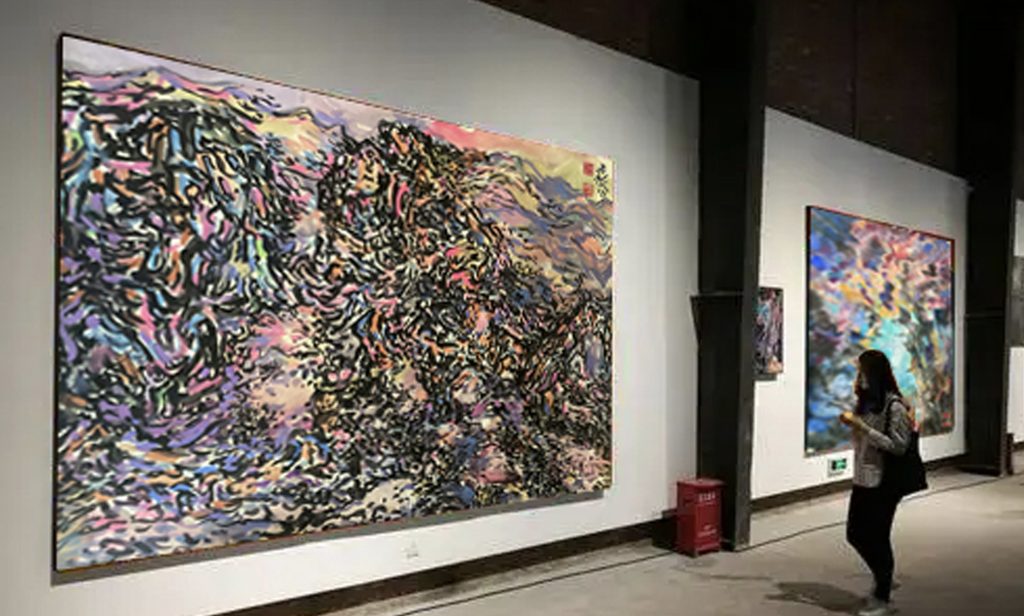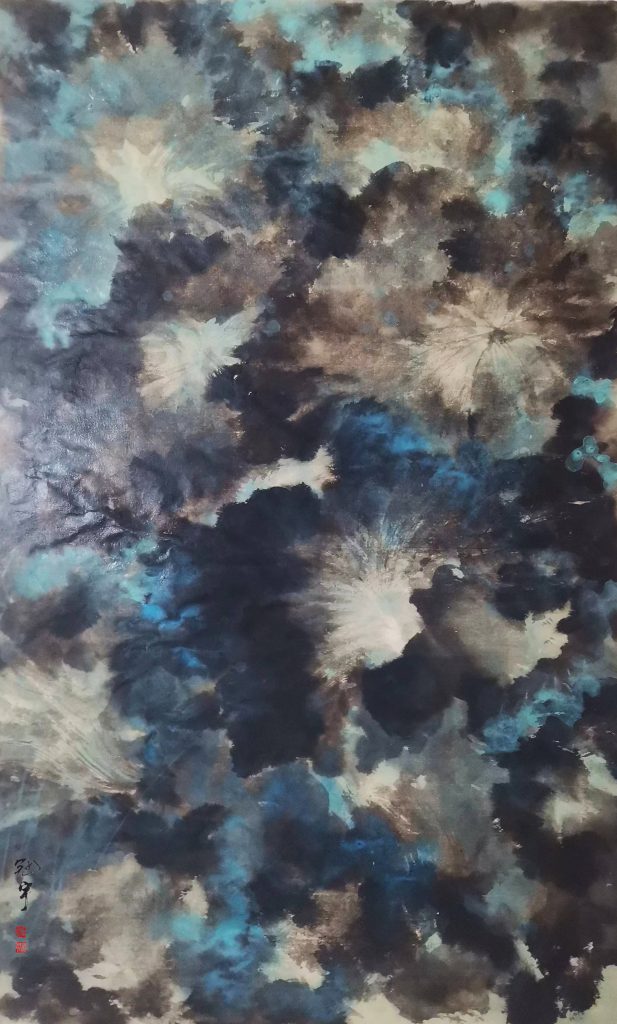
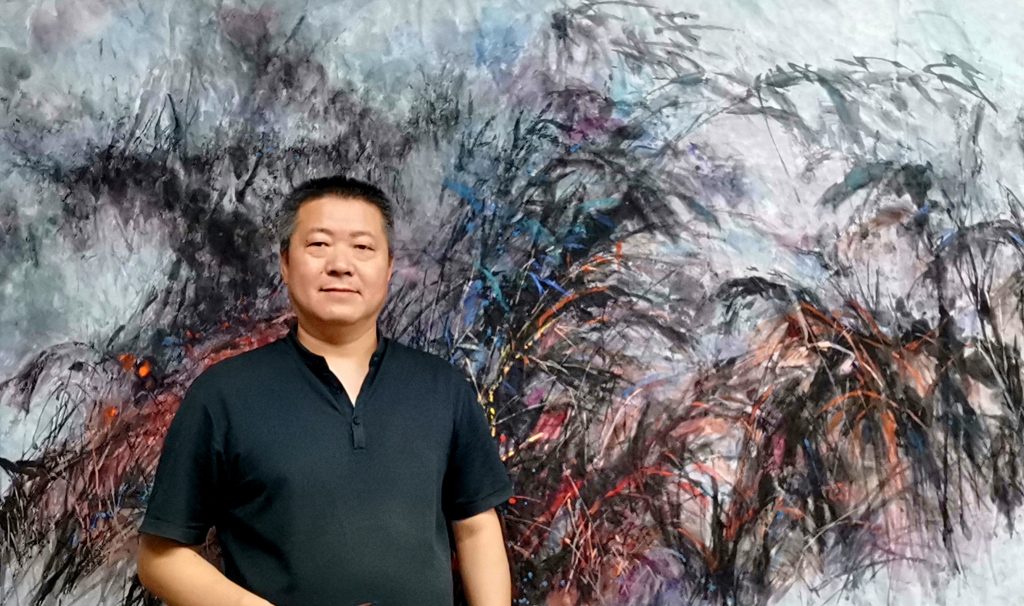
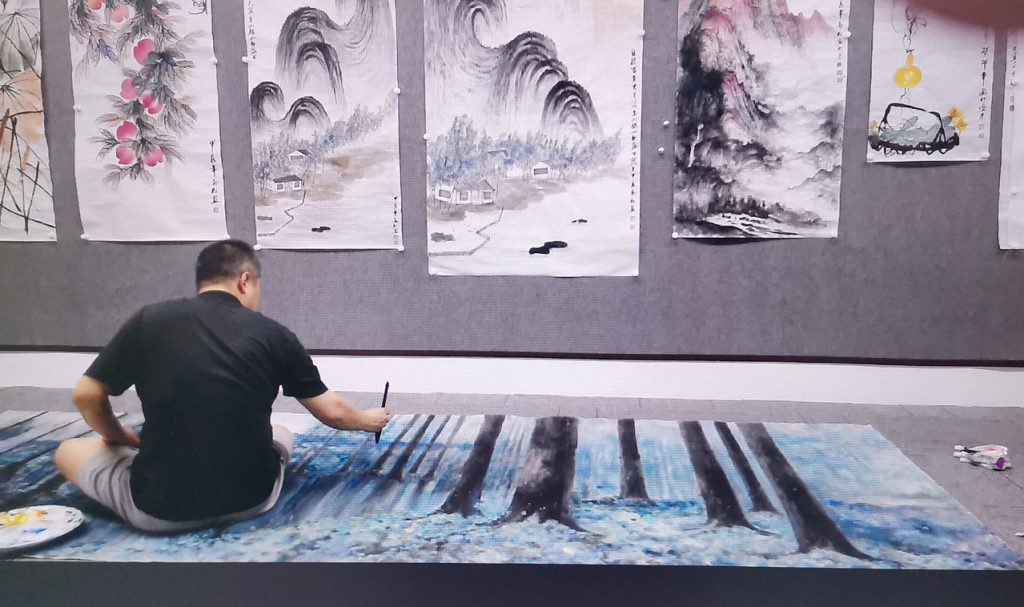
“The Awakening Dragon of the East” – A Fantasy-Color Freehand landscape painting by Mu Ran Gong (Lu Guanyu), exploring the spiritual dialogue between ink and vibrant color.
“The Awakening Dragon of the East” – A Fantasy-Color Freehand landscape painting by Mu Ran Gong (Lu Guanyu), exploring the spiritual dialogue between ink and vibrant color. Chinese contemporary artist, founder of the Fantasy-Color Freehand ink painting style, creator of the “Boundless Fantasy” exhibition series.
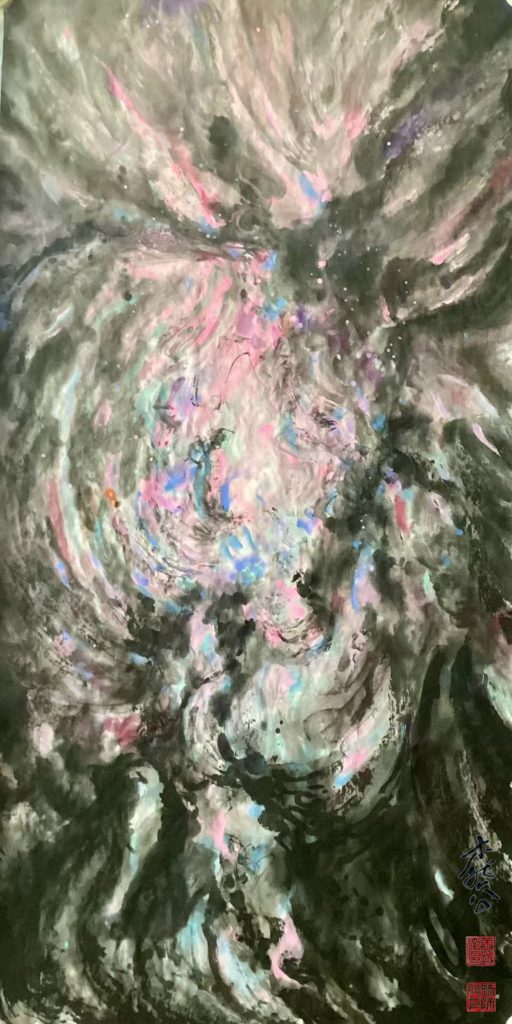
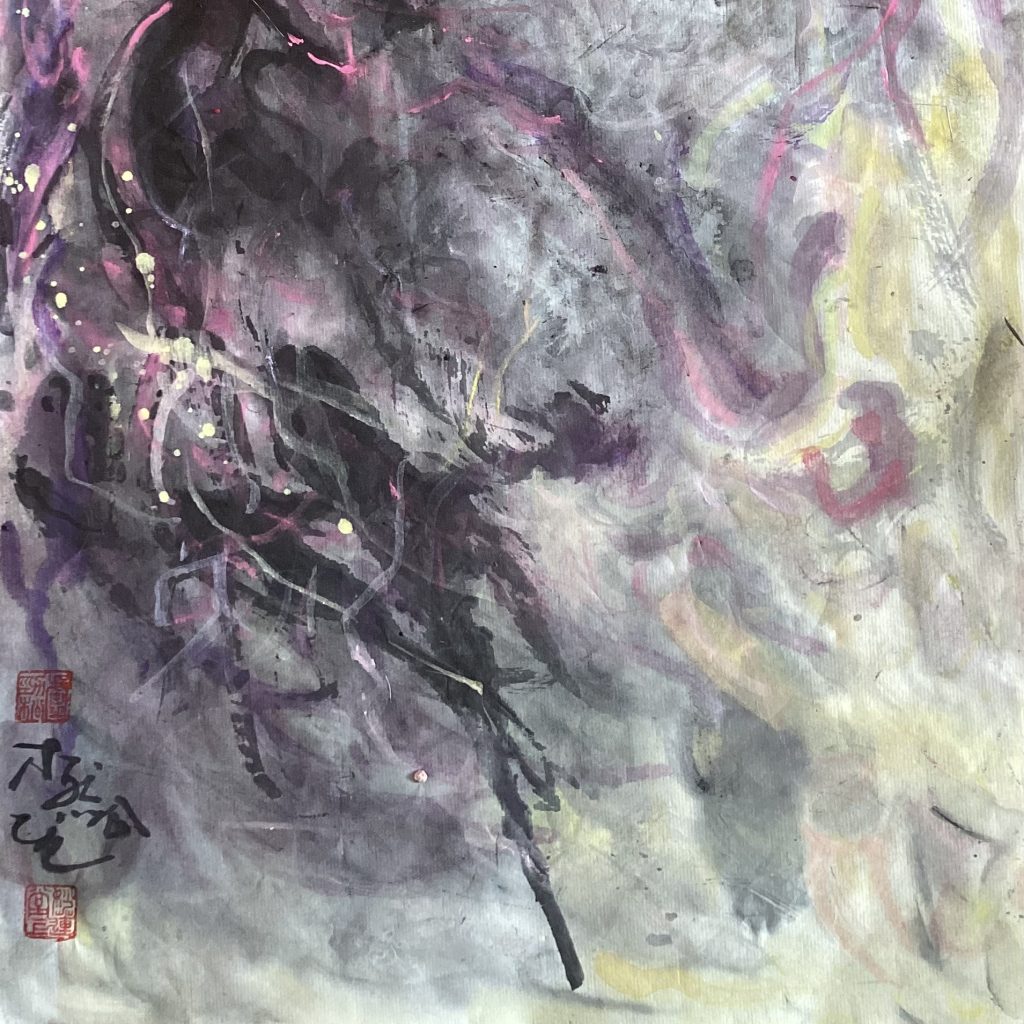
Mu Ran Gong’s “Temporal Overlays” is not merely a technique but the practical application of a unique historical perspective and philosophy of time on canvas. He treats the painting surface as an archaeological site with depth, where each layer of color and ink represents the implantation and dialogue with the artistic “DNA” of a specific era.
The foundational layer may harbor the majestic holism and cosmic order of Song Dynasty landscapes; within it flow the austere brushwork of Bada Shanren and the expressive splashes of Xu Wei; the middle layer incorporates the scientific dissection of light by the Impressionists and the emotional color of Expressionism; the surface shimmers with the mineral texture of Dunhuang frescoes, weathered by millennia, and the planar logic of modern design. This “overlaying” is never mechanical collage but resembles sedimentation, compression, and uplift in geological movements, allowing aesthetics from different times and spaces to collide and permeate, giving birth to entirely new visual life.
This results in the rare “historical penetrability” of his works. The viewer simultaneously senses the vastness of ancient artistry and the acuity of contemporary expression within a single moment. Wu Changshuo’s “spirit of metal and stone” is outlined with colored lines; Pan Tianshou’s “precarious composition” is infused with flowing light. This approach prevents “Fantasy-Color Freehand” from becoming a rootless fashionable style, instead positioning it as a living, ever-evolving tradition. It answers a crucial question: in the age of globalization, how does tradition survive? Mu Ran Gong’s answer: by transforming it into “genetic fragments” that can be decomposed, recombined, and translated for the contemporary era, achieving true resurrection and evolution through overlay.
木然公的“时空层叠”不仅是一种技法,更是一种独特的历史观与时间哲学在画布上的实践。他将画面视为一个具有纵深的考古现场,每一层敷彩运墨,都是一次对特定时代艺术“基因”的植入与对话。
底层,或许沉淀着宋代山水的雄浑整体观与宇宙秩序感;其间,流淌着八大的孤峭笔墨与徐渭的淋漓泼洒;进入中层,印象派对外光的科学分解与表现主义的色彩情感被巧妙转译;而表层,则闪烁着敦煌壁画历经千年磨蚀的矿物肌理与现代设计的平面构成逻辑。这种“叠加”绝非机械拼贴,而是如同地质运动中的沉积、挤压与抬升,让不同时空的美学在碰撞、渗透中孕育出全新的视觉生命。
这造就了其作品罕见的 “历史穿透力” 。观者在同一瞬间,既能感受到古意的苍茫,又能触及当代的锐度。吴昌硕的“金石气”以彩线勾勒,潘天寿的“险峻构图”被注入光的流动。这种处理,使“幻彩写意”避免了成为无根的时尚样式,而是成为了一个活着的、不断生长的传统。它回答了一个关键问题:在全球化时代,传统如何不死?木然公的答案是:将其化为可被分解、重组与当代转译的“基因片段”,在叠加中实现真正的复活与进化。
因此,他的画面是一个时间的晶体,各个切面折射出来自不同纪元的光辉。这不仅是向历史致敬,更是以历史为材料,建造一座通往未来艺术的桥梁。